AS - Foundation Portfolio

GENRE RESEARCH


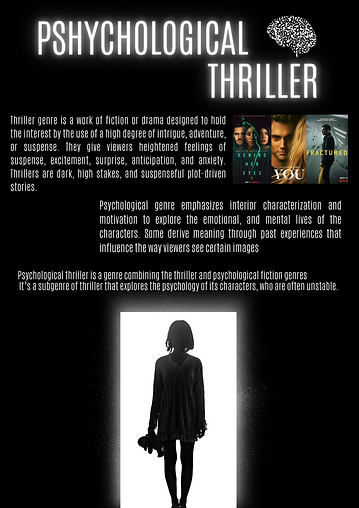
Psychological Thriller
Convention
Mise-en-scene
Shadow and low key lighting - they’re used to add tension into a scene and in some cases are used to represent the inner darkness within the character
Props - mirrors are commonly used in psychological thrillers to portray the use of reflections of a character inner self as well as representing the ‘dark side’ of a character
Costumes - most villains wear casual/ smart clothes fitting in with the theory we have came to
Location - in the majority of the openings, they’re set in modern and urban settings, countryside isn’t often used as it could be confused with horror
Sound
Music used is very eerie and tense => use this to build up tension in a scene or create shock within an audience
Camera Movement
Quick camera movement made => build tension and panic within the scene which then makes the audience feel the same emotions as the character

Editing
Obtrusive & montage editing is used to highlight the feelings & emotions of suspense and tension within a scene
Flashbacks - a typical convention as it shows what has previously happened to give the audience insight in to the characters past or to highlight an important message
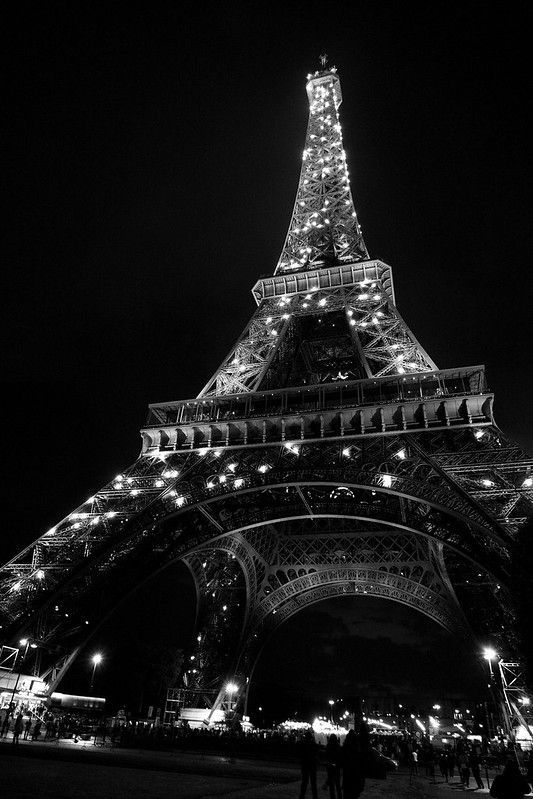
Black and white coloring - to enhance the effectiveness of shadows
Crime Thriller
Convention
Mise-en-scene
Low key lighting - used in order to create a dark atmosphere in crime genre films, conveying feelings of danger and also creating an enigma code as in the darkness, the audience is unsure of what is exactly happening.
Props - weapons such as knives and guns, and stereotypically crowbars are used in crime films during the scene of the crime. Weapons are used as a sign of threat, being used for protection and domination but also as a means of completing the crime.
Location - The location for crime genre films is typically in large cities such as London or New York, with these being very highly populated with large amounts of people living and working there.
Sound
The use of fast-paced music is typically used in crime films in order to create a fast paced atmosphere and draw in the attention of the viewer.
Camera Movement
Low-angled shots are typically used frequently in crime films, this is in order to make people or objects seem more powerful as they are perceived to be larger than they actually are
High-angled shots are used to make people or objects seem smaller and by looking down on them it suggests they are more vulnerable and weak.

Editing
Editing techniques and styles in crime genre films moves from slow to fast, changing the pace of the narrative and speeding up in short, spiking moments of intense action.
The use of long, slower edits are also used, typically during the moment the crime takes place, e.g. sneaking past a security guard.
Romantic Drama
Convention
Mise-en-scene
Lighting - natural lighting to try and communicate normality
Props - every object being used in the film must show that it’s taken from the daily life of an ordinary character without any difference or special. There are no set props that apply to all romantic drama
Location - In this genre, the setting can be set in a wide range of locations, usually in real life locations such as school, coffee shop, library, restaurant, etc. It helped to create the feeling of similarity to the audience which made them more engaged with the film.
Sound
In romantic drama, the music usually used will be from an either up and coming artist/ band or a very famous band which will help to publish the song and the movie

Editing
Shot/ Reverse shot - this shot is the most typical shot in this genre because in the conversation scene, these shots are used to emphasize to the audience both of the character’s facial expression during their dialogue
Close up shot - this short is often used to emphasize the colloquialism between the character and also show the character's relationship status as well as their emotion.
Over shoulder shot - one of the most popular shots because it shows the point of the one character and the facial expression of the other
SELECT GENRE
Psychological Thriller is the major genre that I want my opening sequence to run along since I find this type of film really intriguing and appealing. Psychological thrillers often hit the audience’s psyche by thrilling details which will be more haunting and tense compared to the general thriller. This may be one of the crucial elements that made me obsessed with this film genre. Besides that, while watching a film, I like to have a feeling of suspense and fear therefore others such as romantic drama may not be the best fit for me.

*Click to expand
Representation


In psychological thriller films, its main plot is focused on how the characters handle and manage their unstable emotional state which will help to emphasize the character’s unusual psychology. People with ordinary looks are the one who take the role of acting it as it specialize more on how the actors realistically express the complex network of emotions within the characters.
Differ to general thriller movies, characters in psychological thriller would have a more aggressive way of talking and behaving as it can represent how their mental health had been severely damaged.

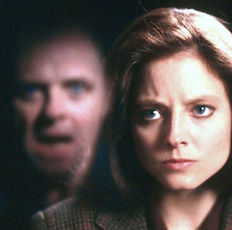


Split is a 2016 American psychological thriller film written, directed and produced by M. Night Shyamalan and starring James McAvoy, Anya Taylor-Joy and Betty Buckley. The film is about Kevin, who is suffering from dissociative identity disorder and has 23 alter egos. He kidnaps three teenage girls in an isolated underground facility
The film premiered at Fantastic Fest on September 26, 2016, and was released in the United States on January 20, 2017. Split was a commercial success, grossing $278 million worldwide on a budget of $9 million.
Split was shot in Philadelphia, Pennsylvania, USA. Filming also took place at Sun Center Studios in Aston, PA. On October 27, 2015, Universal Pictures came on board to release the film and titled it as Split.
I N S T I
T U T I O N
Split is a standalone sequel to Shyamalan's 2000 film Unbreakable
To prepare for his role in Split And Glass, McAvoy packed on about 16 pounds of muscle mass in nearly four months. The star ate every three hours and generally hit the gym two hours after a meal or snack.
Shyamalan kept everything about the script secret from the cast because the script was so shocking and creepy. It makes both McAvoy and Taylor-Joy flabbergasted when reading it and the film staff even said Taylor-Joy to sign on without reading the script as it’s a top-secret